What is confirmation bias?
According to the American Psychological Association, confirmation bias occurs when we look for evidence to support our beliefs and ignore the evidence that doesn’t.
“[confirmation bias is] the tendency to gather evidence that confirms preexisting expectations, typically by emphasizing or pursuing supporting evidence while dismissing or failing to seek contradictory evidence.” – APA
This means that throughout our daily lives, we pay attention to the things that confirm what we believe in. Let me give you an example referred to as the “red car phenomenon.” Once you start thinking of a red car, you notice them everywhere. Try it. You’ll never believe how many red cars you encounter after you start paying attention to them. Even though the number of red cars on the road has not literally increased, you perceive it has. And now that you believe there’s tons of red cars on the road, you will instinctively start noticing more red cars everywhere you go. That’s the confirmation bias at work.
How can I use confirmation bias in my favor?
Since confirmation bias works on beliefs, you have to change your beliefs to change your life. Positive affirmations are a great way to start. Remember this quote from the Barbie movie?
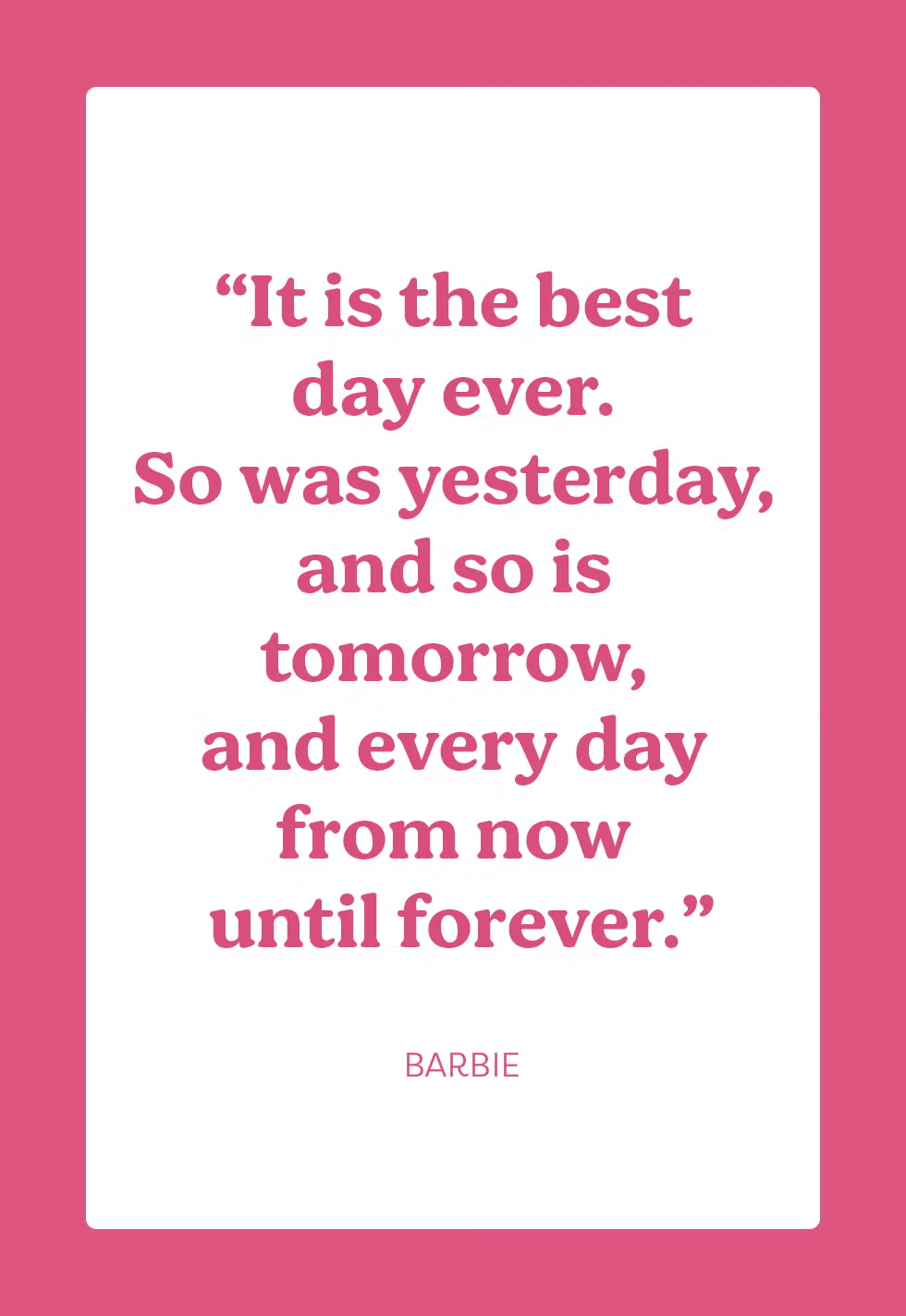
If you start saying this, EVEN THOUGH IT MAY NOT BE TRUE, your brain will find evidence that supports this statement and ignore the rest. And once you turn your attention to having a good day, you will find good things everywhere, just like those red cars.
What’s the evidence?
A college senior at Dominican University in California ran an experiment where other college students received a positive affirmation on their phones every day for two weeks. At the end of the two weeks, their self-esteem and satisfaction with life had increased!
In another experiment, researchers had people visualize their best possible self and write down descriptions using the format “In the future, I will…” for their personal, relational, and professional lives. They did this for 5 minutes every day over the course of two weeks. After the experiment, these people showed much higher optimism, more positive expectancies of the future, and less self-blaming than people who just visualized their daily activities (Meevissen et al., 2011).
What’s my next step?
Based on these experiments, I suggest reading positive affirmations from an app like “I Am” or “Motivation”, journaling using future tense, or visualizing your best possible self. Get creative with what works for you! You can listen to positive affirmations from a podcast or Youtube video, repeat positive affirmations to yourself while making your coffee, title your morning alarm as something positive, or reflect on one good thing that happened every day. After two weeks, you should see the (science-backed) magic improve your life!
Let me know if you try it!
xoxo,
kc
References
American Psychological Association (2018). APA dictionary of psychology. https://dictionary.apa.org/confirmation-bias
Arquiza, L. (2020) The effect of positive affirmations on self-esteem and well-being in college students. Psychology Senior Theses. 10. https://doi.org/10.33015/dominican.edu/2020.PSY.ST.01
Meevissen, Y. M. C., Peters, M. L., & Alberts, H. J. E. M. (2011). Become more optimistic by imagining a best possible self: Effects of a two week intervention, Journal of Behavior Therapy and Experimental Psychiatry, 42(3), 371-378. https://doi.org/10.1016/j.jbtep.2011.02.012
Featured image credit: Pinterest
 Colorful Life
Love this post! The power of positive thinking! 🙂
LikeLiked by 1 person